
Few garments have become as deeply connected with the history of the Soviet Union as the wool military greatcoat, known simply as the Shinel. More than just winter clothing, it became a symbol of endurance, discipline, and everyday military life. For decades, generations of servicemen wore the same recognizable long grey overcoat during parades, field exercises, guard duty, railway journeys, and harsh winters across the vast territory of the Soviet Union.
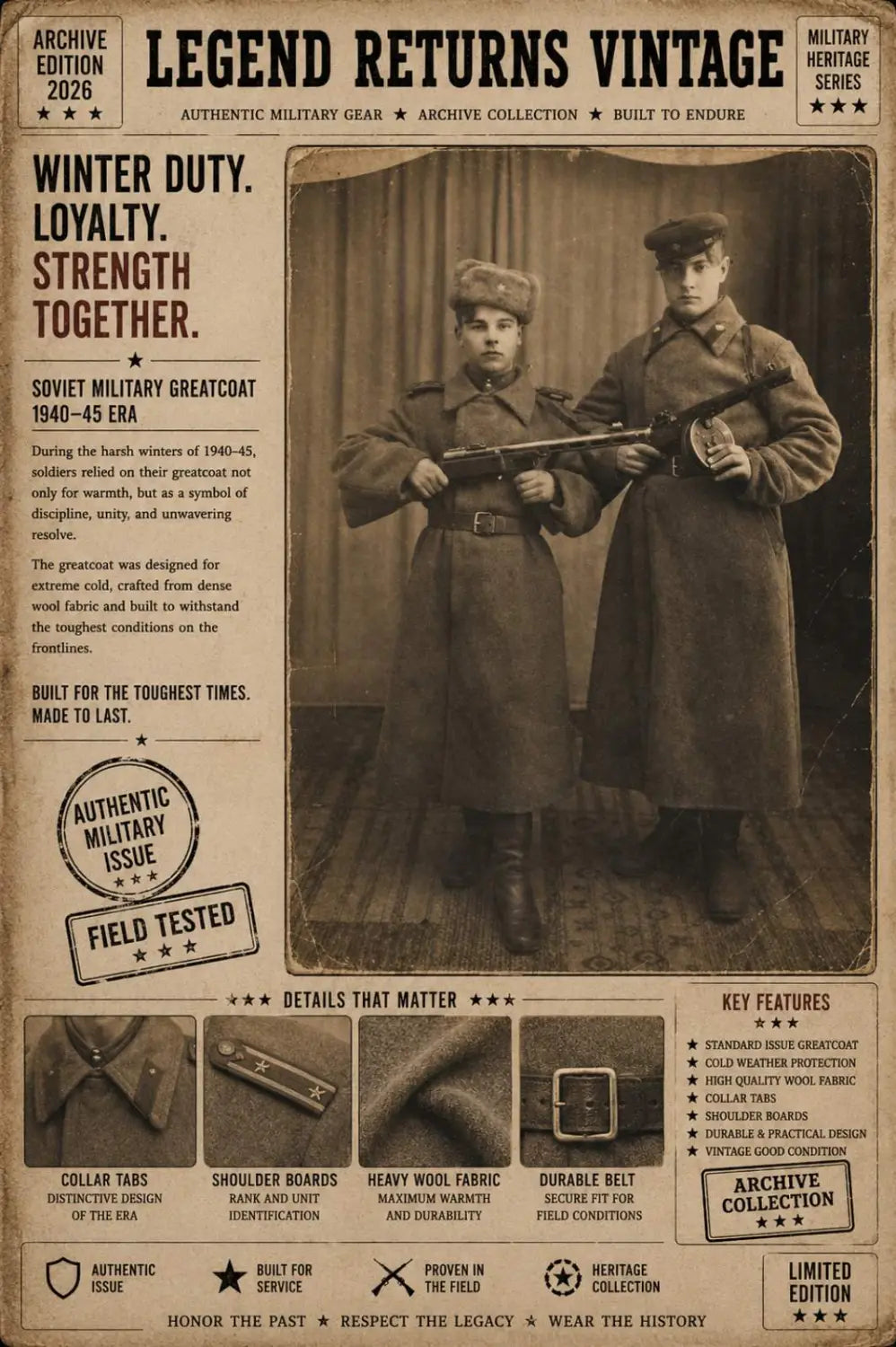
Today, the Soviet wool greatcoat remains one of the most collectible pieces of Cold War military clothing. Museums preserve them, historians study them, filmmakers use them for historical productions, and collectors search for original examples that still retain their authentic factory details. Behind every surviving coat lies a remarkable story that stretches across more than two centuries of military history.
Although the Soviet greatcoat became an icon of the twentieth century, its origins reach much further back. Long wool military overcoats appeared throughout Europe during the eighteenth and nineteenth centuries, providing soldiers with protection against rain, snow, and freezing temperatures. Heavy wool was one of the few materials capable of retaining warmth even when exposed to damp weather, making it an obvious choice for military clothing.
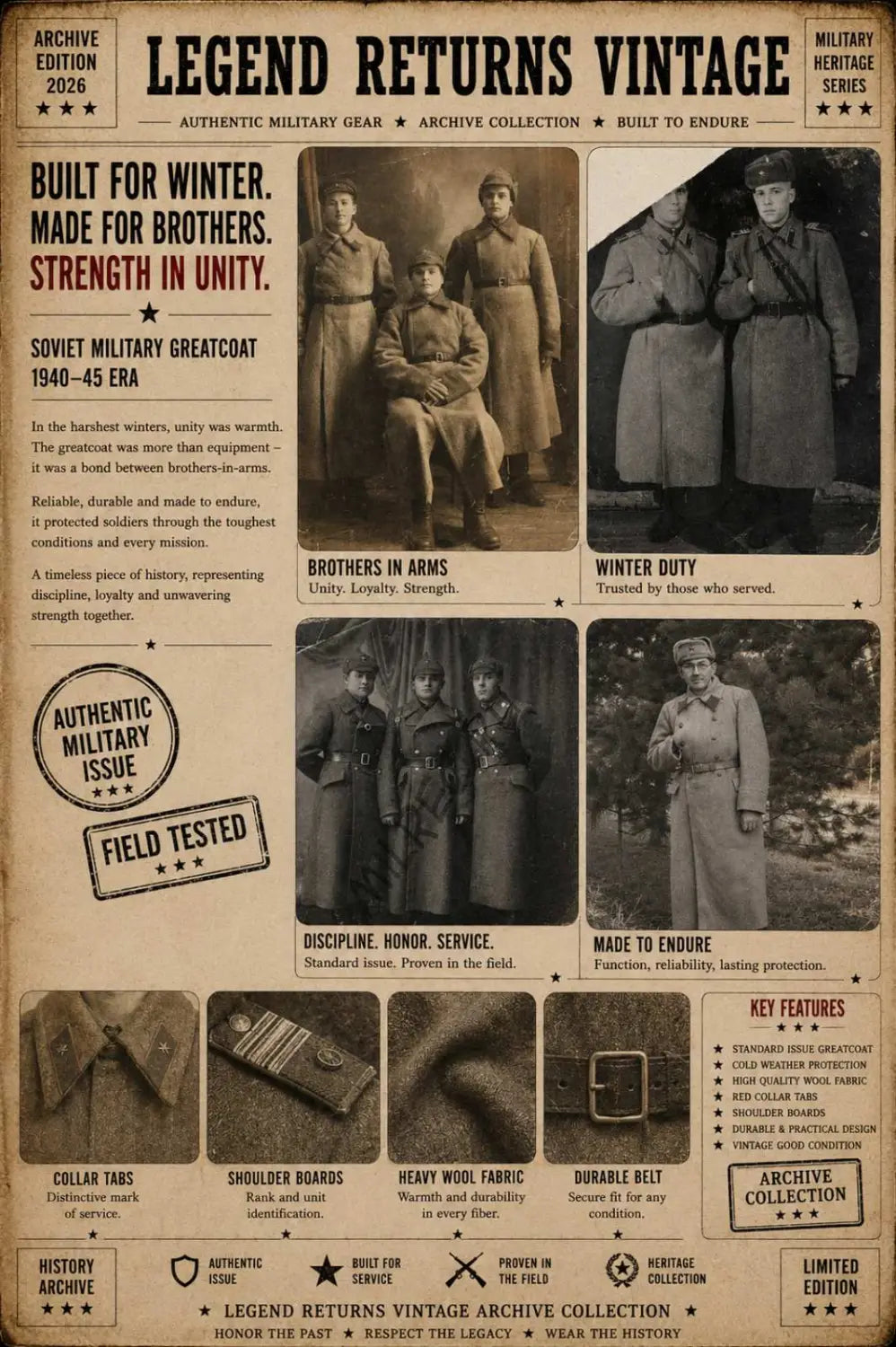
As military uniforms evolved, the long overcoat became an essential part of every soldier's equipment. Unlike lighter jackets designed for active movement, the greatcoat served multiple purposes. It protected soldiers during marches, provided warmth while standing guard, acted as a blanket during overnight bivouacs, and often became the only protection against severe winter weather.
Following the formation of the Soviet Union in 1922, the newly organized armed forces began standardizing uniforms for a rapidly growing military. Clothing needed to be durable, practical, inexpensive to manufacture, and capable of serving millions of personnel spread across an enormous territory that stretched through forests, mountains, plains, deserts, and some of the coldest inhabited regions on Earth.
The greatcoat naturally became one of the foundations of Soviet military clothing.
Throughout the 1920s and 1930s, Soviet designers introduced improvements intended to simplify production while maintaining functionality. Heavy wool cloth remained the primary material because of its excellent insulating properties and remarkable durability. The coats were intentionally designed to survive years of continuous service rather than only a single season.
By the mid-1930s, the Soviet wool greatcoat had already become one of the most recognizable elements of military appearance. Its long silhouette, broad collar, shoulder straps, and distinctive grey color created an image that would become familiar across the Soviet Union for decades.
One of the greatest tests of the greatcoat came during the Second World War.
Millions of Soviet servicemen found themselves operating under some of the harshest conditions imaginable. Long winters, deep snow, freezing winds, and extended campaigns demanded clothing capable of protecting soldiers from the environment as much as from the enemy. The wool greatcoat became indispensable. It served not only as outerwear but also as a blanket, pillow, improvised shelter, and protection during long nights spent in trenches or temporary camps.
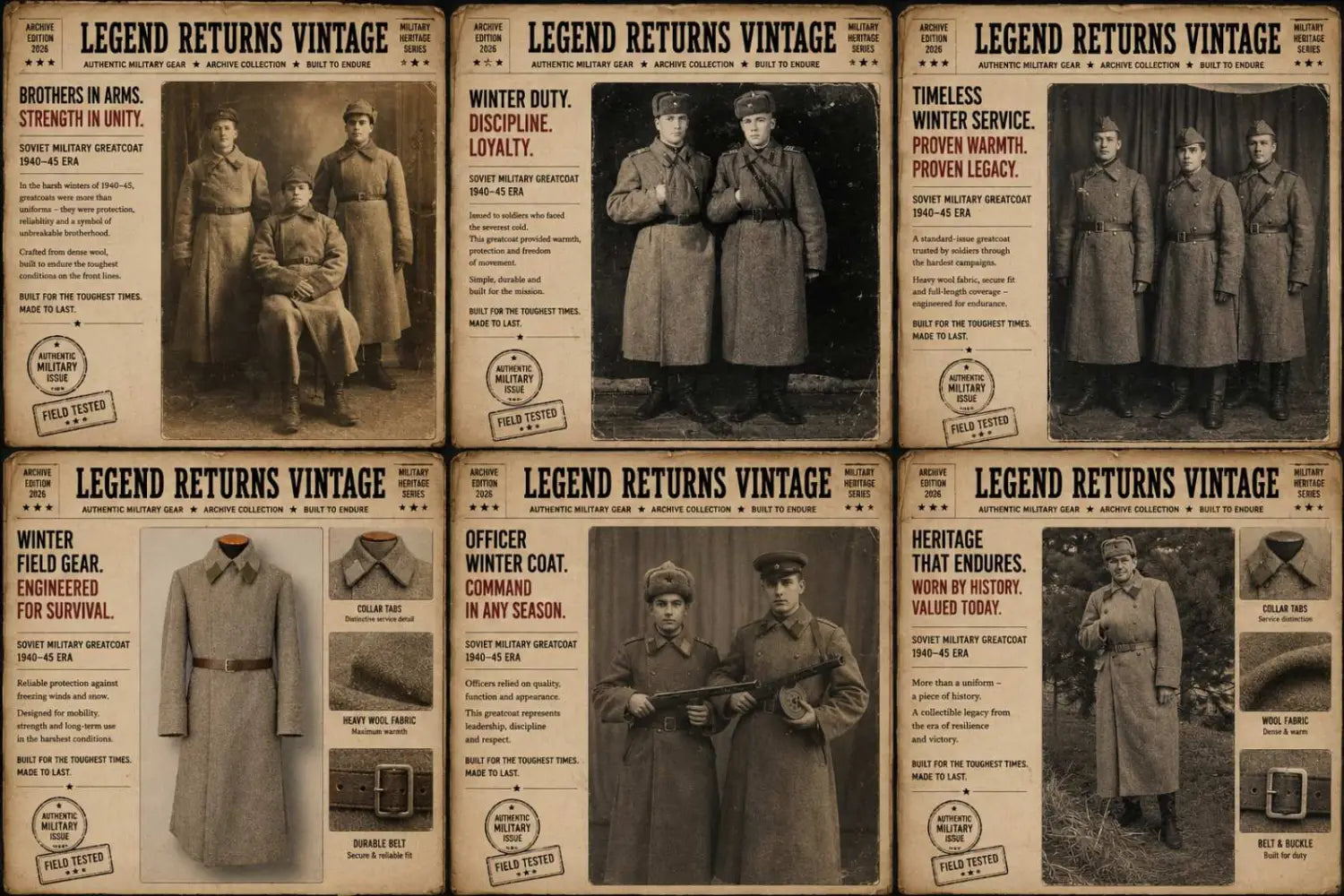
Historical photographs from the period frequently show Soviet personnel wrapped tightly in their heavy wool coats while marching through snow-covered landscapes or standing guard in freezing temperatures. Although the greatcoat was heavy by modern standards, it earned tremendous respect because it could continue providing warmth even after years of hard use.
One of the reasons for its success was the remarkable quality of the wool fabric. Dense wool naturally trapped air between its fibers, creating effective insulation while remaining breathable. Unlike many synthetic materials developed decades later, properly woven wool continued to provide warmth even when exposed to moisture.
Following the introduction of shoulder boards in 1943, several design elements of Soviet uniforms changed, including details of the greatcoat. These modifications reflected broader reforms within Soviet military dress and helped establish the appearance that would remain familiar throughout the remainder of the Soviet era.
After the war, the Soviet Union entered a period of reconstruction followed by the long decades of the Cold War. Although military technology advanced rapidly, the wool greatcoat remained remarkably consistent. New vehicles, aircraft, and equipment appeared, yet the trusted overcoat continued serving generation after generation of military personnel.
During the 1950s, 1960s, 1970s, and 1980s, almost every serviceman spent part of his military career wearing a greatcoat. It accompanied recruits during their first days of service, officers throughout their professional careers, and ceremonial units during official events. Whether standing guard at military installations, travelling by train between assignments, participating in winter exercises, or marching during military parades, the greatcoat became part of daily life.
Its design reflected decades of practical experience.
The double-breasted front provided additional insulation against cold winds.
The long cut protected most of the body without restricting movement.
Large lapels could be raised to shield the neck from snow and icy air.
The thick wool cloth resisted wear remarkably well, allowing coats to remain in service for many years.
Even details such as shoulder boards, collar tabs, interior reinforcement, and carefully positioned buttons demonstrated the Soviet approach to durable military clothing.
The greatcoat also became deeply embedded within Soviet culture. Countless memoirs written by veterans describe sleeping under greatcoats during field exercises, carrying them during long marches, or using them as protection while travelling across the vast territory of the USSR. Military films frequently portrayed soldiers wrapped in heavy wool coats, reinforcing the image of the greatcoat as one of the defining symbols of Soviet service.
Like many famous military garments, the greatcoat developed its own traditions.
Experienced servicemen learned how to roll and carry it efficiently.
Young recruits quickly discovered that properly maintaining a wool greatcoat required patience and care.
Officers often took particular pride in preserving the appearance of their coats, ensuring that the heavy wool remained clean and properly brushed despite years of use.
By the final decades of the Soviet Union, the greatcoat had become more than uniform clothing.
It represented continuity.
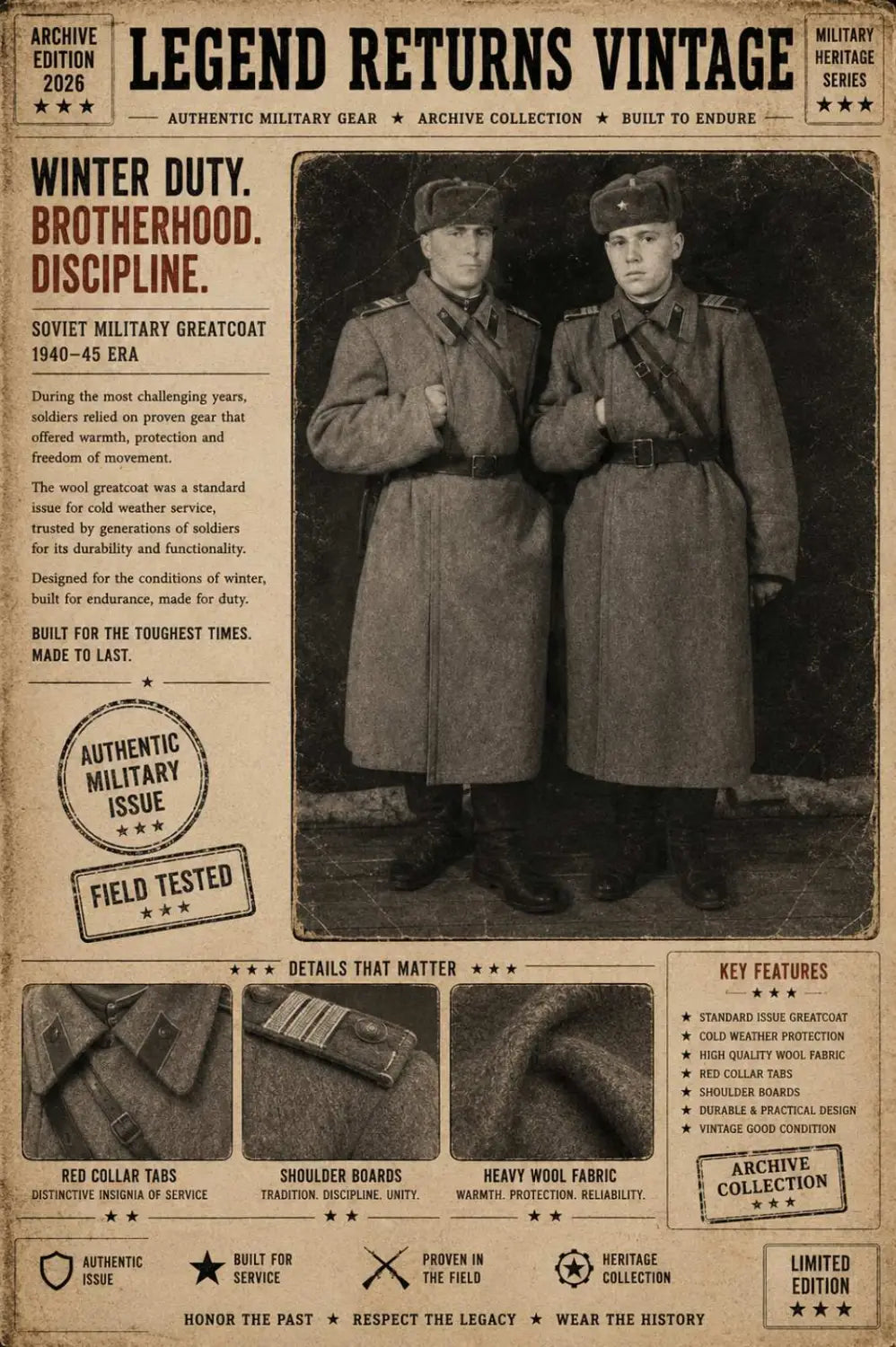
Generations separated by decades had worn nearly identical coats while serving under completely different historical circumstances.
The same garment accompanied soldiers during reconstruction after the Second World War, throughout the Cold War, and until the final years of the Soviet Union itself.
After 1991, military clothing gradually evolved toward lighter synthetic materials designed for greater mobility and reduced weight. Modern insulated jackets eventually replaced heavy wool overcoats for many practical purposes.
Yet the Soviet greatcoat never disappeared from history.
Collectors soon recognized its historical importance.
Museums preserved original examples.
Film productions relied on authentic coats to recreate the atmosphere of the twentieth century.
Historical reenactors searched for genuine Soviet-manufactured examples.
Vintage clothing enthusiasts appreciated the remarkable tailoring, premium wool fabric, and timeless silhouette that allowed the greatcoat to remain stylish even decades after it left military service.
An authentic example of this original Soviet wool greatcoat can be viewed here:
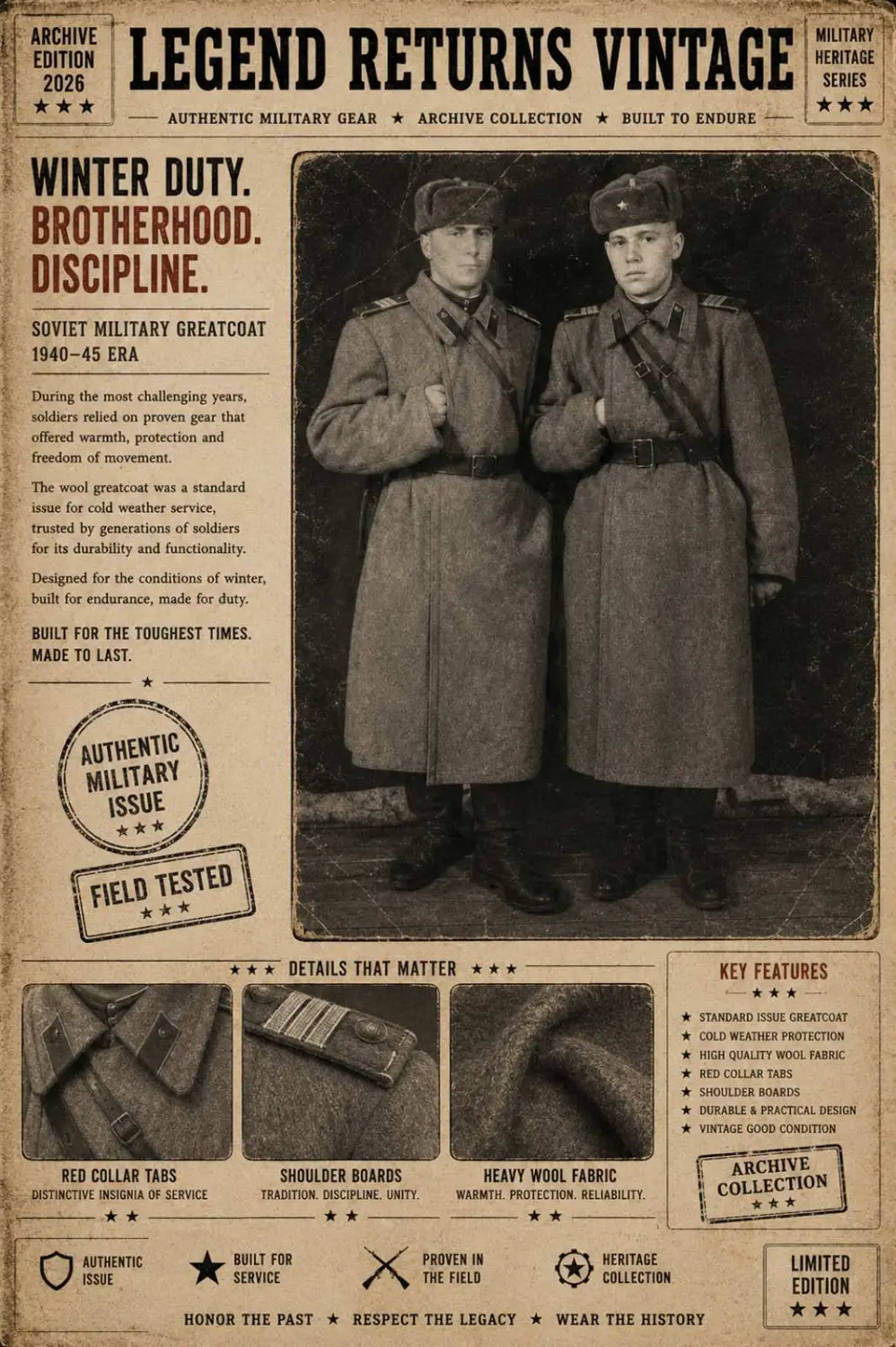
Collectors searching for authentic Soviet uniforms and historical military clothing often discover carefully preserved original pieces through Legend Returns Vintage, where genuine artifacts connected to the history of the USSR continue to be preserved for future generations.
The Soviet wool greatcoat is far more than an old military overcoat.
It is a witness to history.
Its heavy wool has endured snowstorms, military parades, railway platforms, guard posts, and decades of everyday service. Every fold, every button, and every stitch reflects the practical philosophy of an era that valued durability, simplicity, and reliability above all else.
Today, surviving examples continue to connect collectors with one of the most remarkable periods of twentieth-century history. They remind us that history is often preserved not only in monuments and archives, but also in the clothing worn by ordinary people whose daily lives shaped the world around them.
More than a uniform...
The Soviet Shinel remains one of the greatest symbols of endurance ever produced by the Soviet Union.
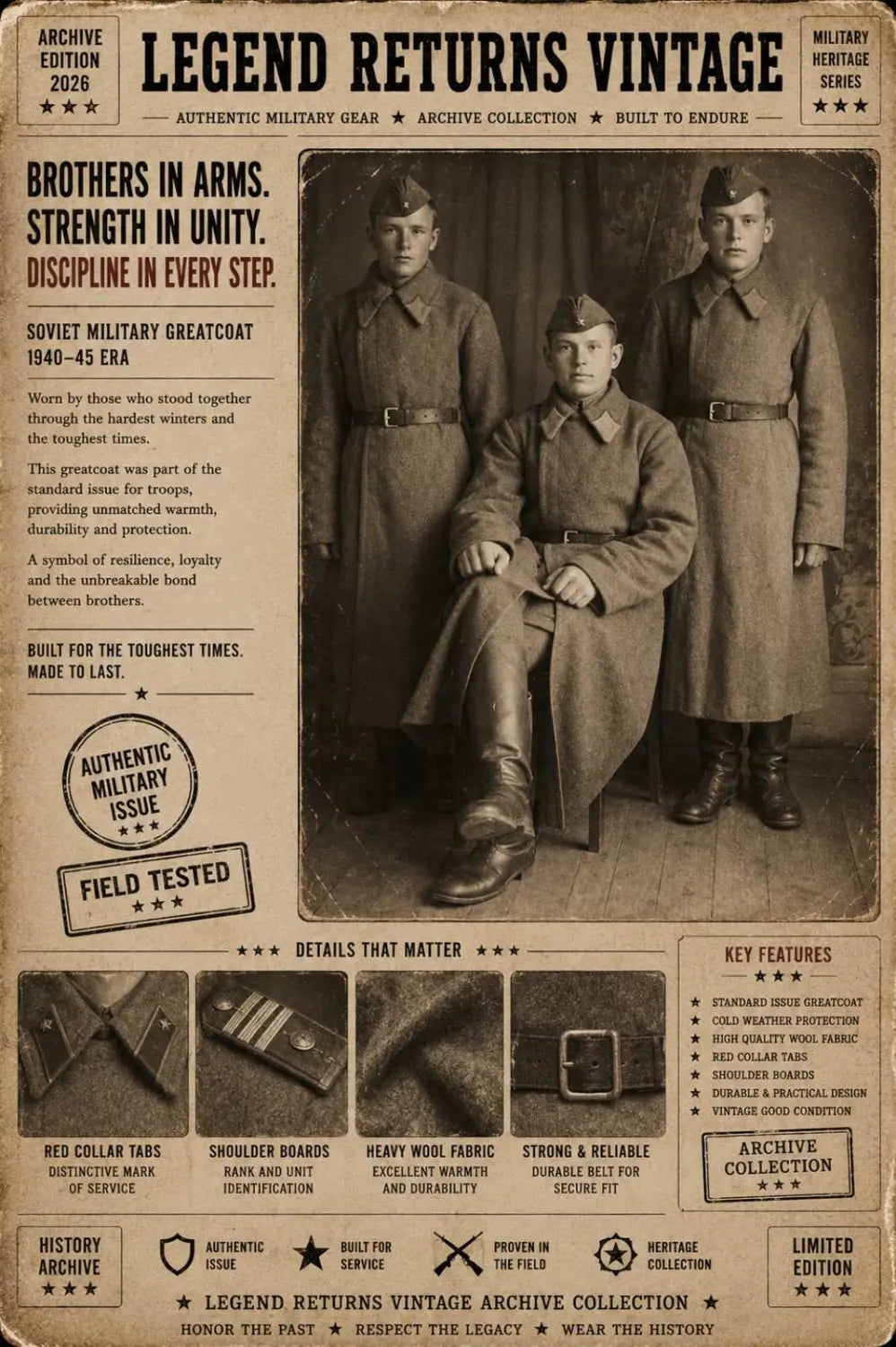
✦ Preserve History. Own a Piece of the Past. ✦
Discover authentic Soviet militaria at Legend Returns Vintage.
Carefully selected historical items for collectors, reenactors, museums, film productions, and vintage enthusiasts worldwide.