
Technical History of the Soviet Tank Crew Helmet Shlemofon
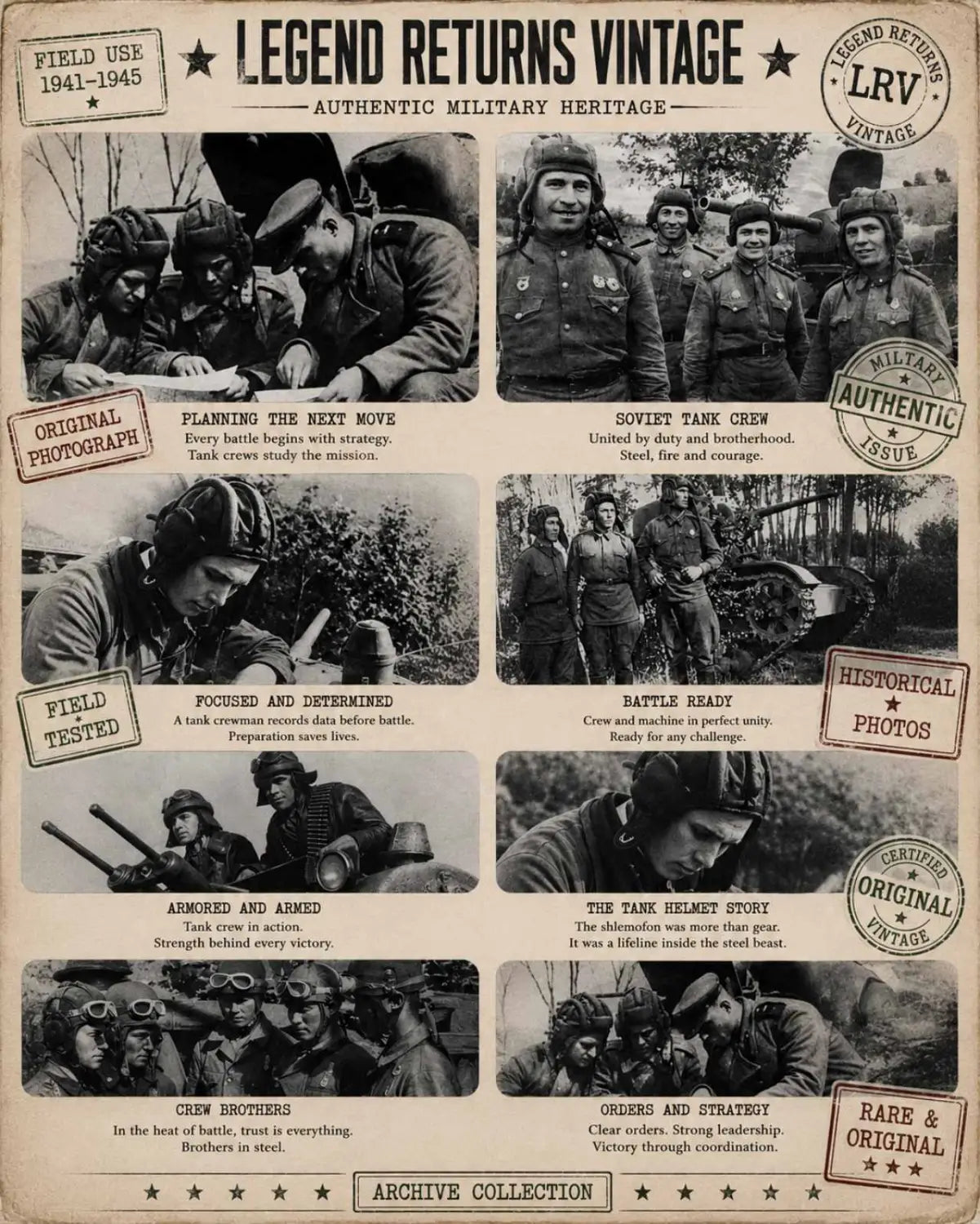
The Soviet tank crew helmet, widely known by the Russian term shlemofon, was a padded protective and communication headgear system developed for armored vehicle crews. Its purpose was not ballistic protection, but impact reduction, insulation, and integration of communication equipment inside tanks, self-propelled vehicles, and other enclosed armored platforms.

The typical Soviet tank helmet used a soft padded shell, reinforced impact pads, earphone pockets, throat microphone elements, fastening straps, and a close-fitting form designed to protect the head from bumps against steel interior surfaces during vehicle movement, recoil, vibration, braking, and off-road driving.
👉 Looking for the real deal? You can buy the Vintage Soviet Tank Crew Helmet USSR Tanker Padded Communication Helmet here at Legend Returns Vintage.
Definition and Function
The term shlemofon combines the idea of a helmet with integrated communication equipment. In Soviet usage, it referred to a soft protective helmet fitted with headphones and often paired with throat microphones. The item belonged to the technical equipment of armored vehicle crews rather than to ordinary infantry headwear.
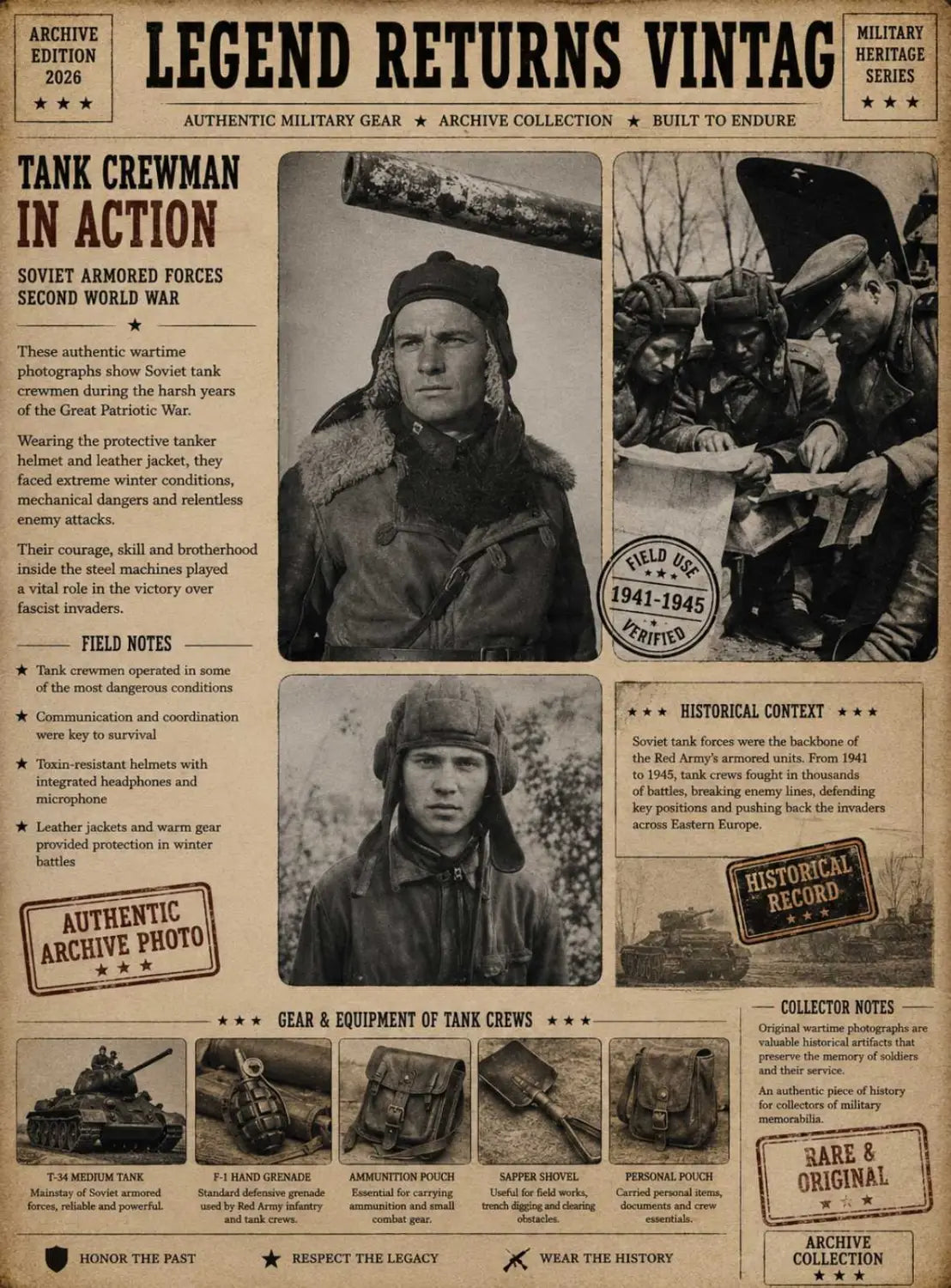
Inside a tank, the main danger to the crew member’s head was not only enemy fire, but constant impact with the interior structure of the vehicle. The crew worked surrounded by metal hatches, sights, ammunition racks, radio equipment, handles, turret rings, and structural edges. Sudden movement of the vehicle could throw the operator against these surfaces. The padded tank helmet reduced this risk.
Armored Vehicle Environment
Soviet armored vehicles were compact, mechanically dense, and noisy. Engines, tracks, transmission systems, ventilation, turret rotation, gun recoil, and radio traffic created a working environment where ordinary speech was often ineffective. Communication inside the vehicle was essential for coordinated movement, target observation, loading, firing, and maneuvering.
The shlemofon solved two problems at once: it protected the head from internal impact and carried communication hardware close to the ears and throat. This made it possible for the commander, driver, gunner, loader, and radio operator to receive orders and transmit information while the vehicle was moving.
Historical Development
Soft padded tank helmets appeared as armored vehicle design matured during the twentieth century. Early tank crews quickly discovered that the interior of an armored vehicle could be as hazardous as the battlefield itself. Even during routine movement, crew members could strike their heads against metal surfaces.
By the mid-twentieth century, Soviet tank helmet design had become a recognizable standard. The general form remained stable for decades: a close-fitting padded cap with prominent protective rolls, ear sections for communication equipment, chin or throat fastening, and textile or leather-like exterior materials depending on production period and model.
Construction Principles
The Soviet tank helmet was built around impact absorption rather than rigid armor. Its padded ribs and reinforced sections distributed force across the head and reduced direct contact with steel surfaces. The most visible pads were usually placed along the crown, forehead, sides, and rear of the head.
The helmet had to remain flexible enough for long wear inside a confined vehicle. A rigid metal helmet would have been uncomfortable and impractical in many crew positions. The soft structure allowed the tanker to wear the item for extended periods while still moving within the vehicle interior.

Materials and Exterior Finish
Different Soviet tank helmets were produced with variations in textile, coated fabric, leather, artificial leather, and insulating materials. Winter versions could include warmer lining, while lighter versions were intended for milder conditions. The exterior was usually dark, practical, and non-reflective.
The material choice reflected the Soviet approach to equipment: durable, repairable, standardized, and suitable for mass production. The helmet did not need decorative detail. It needed to survive storage, transport, repeated issue, heavy use, and harsh operating conditions.
Communication Equipment
A key feature of the shlemofon was its communication function. Soviet armored vehicles relied on internal communication systems that allowed crew members to coordinate through headphones and microphones. The helmet provided a stable platform for this equipment.
Earphone elements were positioned near the ears, while throat microphones were placed around the neck area to capture speech through vibration. This was especially useful in a loud environment where ordinary microphones could be overwhelmed by engine noise, track noise, and mechanical vibration.
Throat Microphone System
The throat microphone was an important technical solution for armored vehicle crews. Instead of relying only on air-transmitted speech, it picked up vibrations from the user’s throat. This helped improve intelligibility in noisy conditions.
This system was particularly useful inside tanks, where the crew worked near engines, rotating machinery, ventilation systems, and weapons mechanisms. The throat microphone allowed short commands and responses to be transmitted more clearly through the intercom or radio system.
Role in Tank Crew Coordination
Tank operation required fast communication. The commander observed, selected targets, and directed movement. The driver controlled the vehicle. The gunner aimed and fired. The loader prepared ammunition. In many armored vehicles, these roles had to function as one coordinated system.
The shlemofon helped create that system. It allowed orders to move quickly from one crew member to another without relying on shouting, gestures, or physical contact. In a confined armored vehicle, this communication could be decisive for movement, safety, and technical control.
Protective Design
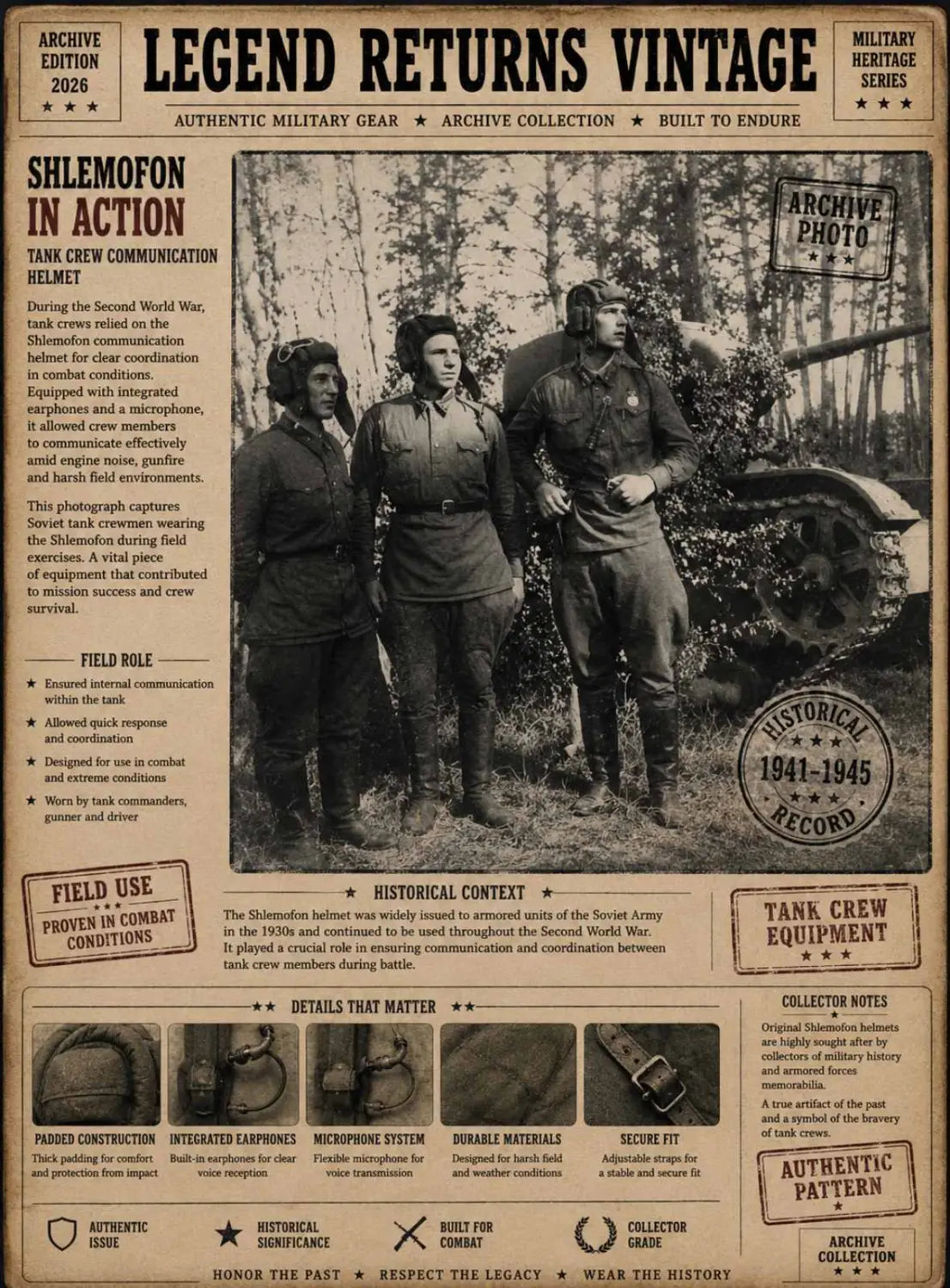
The protective pads on the Soviet tank helmet were placed according to practical crew needs. The crown protected against overhead contact with hatch rims and internal fittings. Side padding protected against turret walls and radio equipment. Rear padding reduced impact against the back of the compartment.
Unlike a steel helmet, the tank helmet was not designed to stop fragments or bullets. Its protection was specialized: it was a technical safety item for the interior of an armored vehicle. This distinction is important for collectors and historians.
Winter and Summer Variants
Soviet tank helmets existed in different seasonal configurations. Winter examples often had heavier insulation, warmer lining, and more substantial coverage. Summer versions were usually lighter, with less insulation and improved comfort for warm conditions.
These seasonal differences reflected the wide climatic range in which Soviet armored forces operated. Equipment had to function in snow, mud, dust, heat, rain, and long storage conditions. A single design concept was adapted through material and lining variations.
Visual Identification
The Soviet tank crew helmet is easy to recognize because of its padded rib structure. The raised rolls give the helmet its characteristic appearance. The ear sections, communication wiring, throat microphone assembly, and fastening straps are also important identification features.
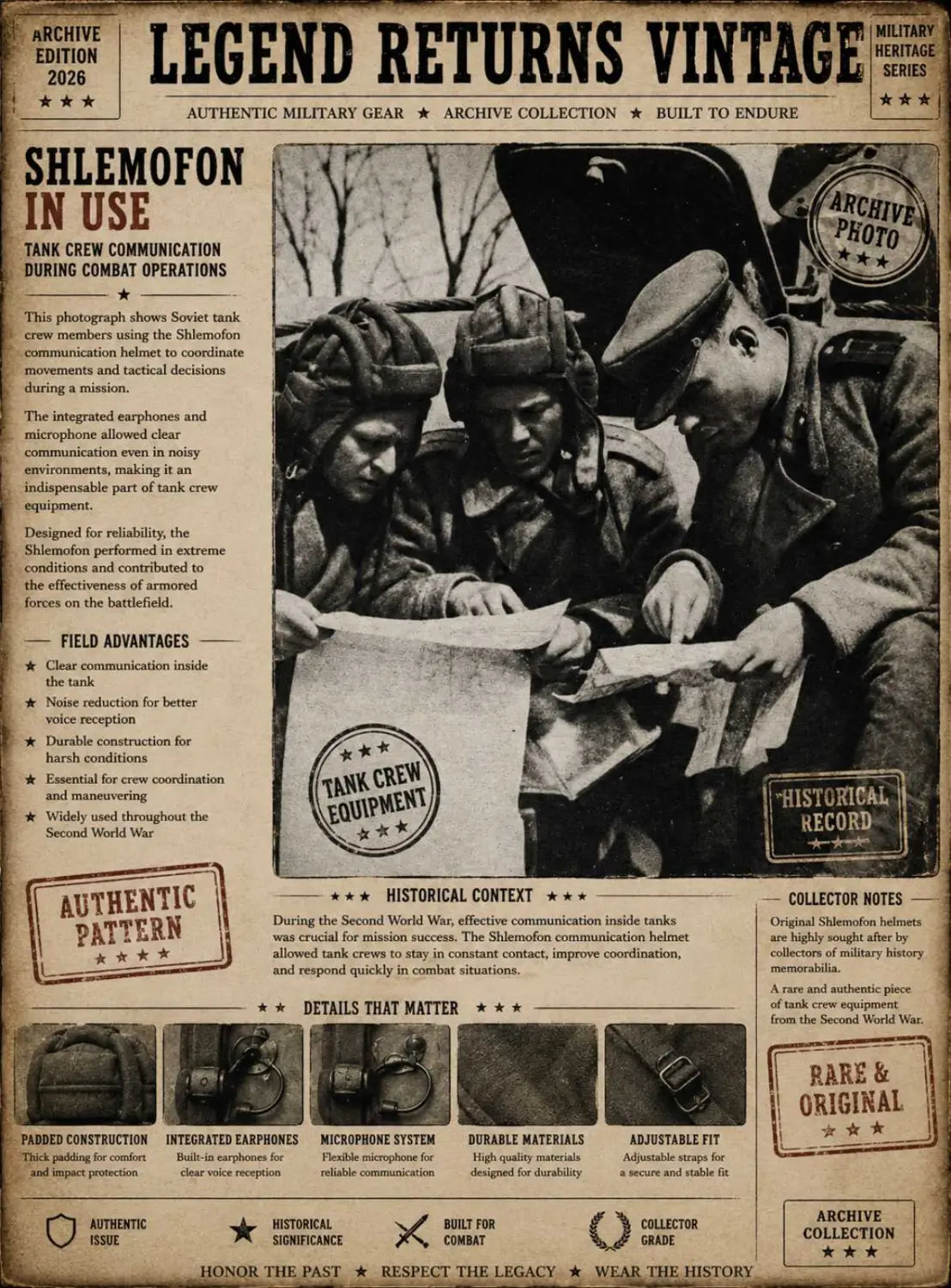
Collectors often examine the condition of the pads, stitching, lining, earphone pockets, cable connectors, microphone elements, and interior markings. Authentic vintage examples may show storage marks, surface wear, fading, dust, or light age-related changes.
Use Beyond Tanks
Although strongly associated with tanks, this type of helmet was also relevant to other armored and tracked vehicles. Self-propelled artillery, armored personnel carriers, engineering vehicles, and training machines could also require similar crew communication and head protection.
The basic problem was the same: a crew member working inside a noisy metal vehicle needed both protection and communication. The shlemofon became a practical solution across multiple armored vehicle categories.
Symbolic Status
The Soviet tank helmet became one of the most recognizable pieces of armored crew equipment. Its silhouette is strongly connected with tank crews in photographs, film archives, museum displays, and historical reenactment.
For many collectors, the shlemofon represents more than a helmet. It represents the technical world of armored warfare: confined interiors, radio communication, crew discipline, mechanical endurance, and the industrial design language of the USSR.
Comparison with Ordinary Helmets
An ordinary steel helmet was designed primarily for external battlefield protection. The shlemofon was designed for internal vehicle use. It was softer, more fitted, and integrated with communication equipment.
This difference explains why tank crews did not simply rely on standard steel helmets inside armored vehicles. A rigid helmet could be uncomfortable and awkward in a cramped turret. The soft padded tank helmet was better suited to the actual working environment.
Collecting Soviet Tank Helmets
Original Soviet tank helmets are collected by militaria enthusiasts, museums, reenactors, film studios, theater productions, and historical wardrobe departments. They are valued because they are visually distinctive, technically interesting, and strongly connected to armored vehicle history.
Condition is especially important. Complete examples with communication elements are more desirable than incomplete shells. However, even helmets with age marks or storage wear can be historically valuable, because they preserve the original construction and material character.
Authenticity and Condition
Authentic vintage Soviet tank helmets may show signs of long storage, surface aging, textile wear, minor discoloration, or hardened components. These features are normal for historical equipment and should not automatically be seen as defects.
Collectors should look for coherent construction, period-correct materials, functional design logic, and natural aging. The presence of communication components, original stitching, correct padded structure, and proper form can help support identification.
Importance for Museums and Film Work
The shlemofon is a valuable object for visual reconstruction because it immediately identifies a tank crew member. In film, theater, museums, and photo shoots, it provides a strong historical signal without requiring explanation.
For costume departments and historical displays, original examples offer texture and authenticity that modern replicas often lack. The aged material, real stitching, weight, and construction details create a more convincing archival appearance.
Conclusion
The Soviet tank crew helmet shlemofon was a specialized technical item built for armored vehicle service. Its purpose combined head protection, comfort, and communication in one practical design.
Its padded structure, communication system, and distinctive silhouette make it one of the most important Soviet armored crew artifacts of the twentieth century. For collectors, reenactors, museums, film productions, and vintage enthusiasts, it remains a powerful example of functional Soviet design.
Preserve History. Own a Piece of the Past.
✦ Preserve History. Own a Piece of the Past. ✦
Discover authentic Soviet militaria at Legend Returns Vintage.
Carefully selected historical items for collectors, reenactors, museums, film productions, and vintage enthusiasts worldwide.