
Among all Soviet field uniforms produced during the Cold War, few have achieved the legendary status of the Mabuta. Instantly recognizable to collectors, military historians, and enthusiasts of Soviet special forces history, the Mabuta became one of the most respected and sought-after uniforms ever worn by elite units of the USSR. Decades after its introduction, original examples remain symbols of a unique era when Soviet special operations units were adapting to new challenges across vastly different environments.
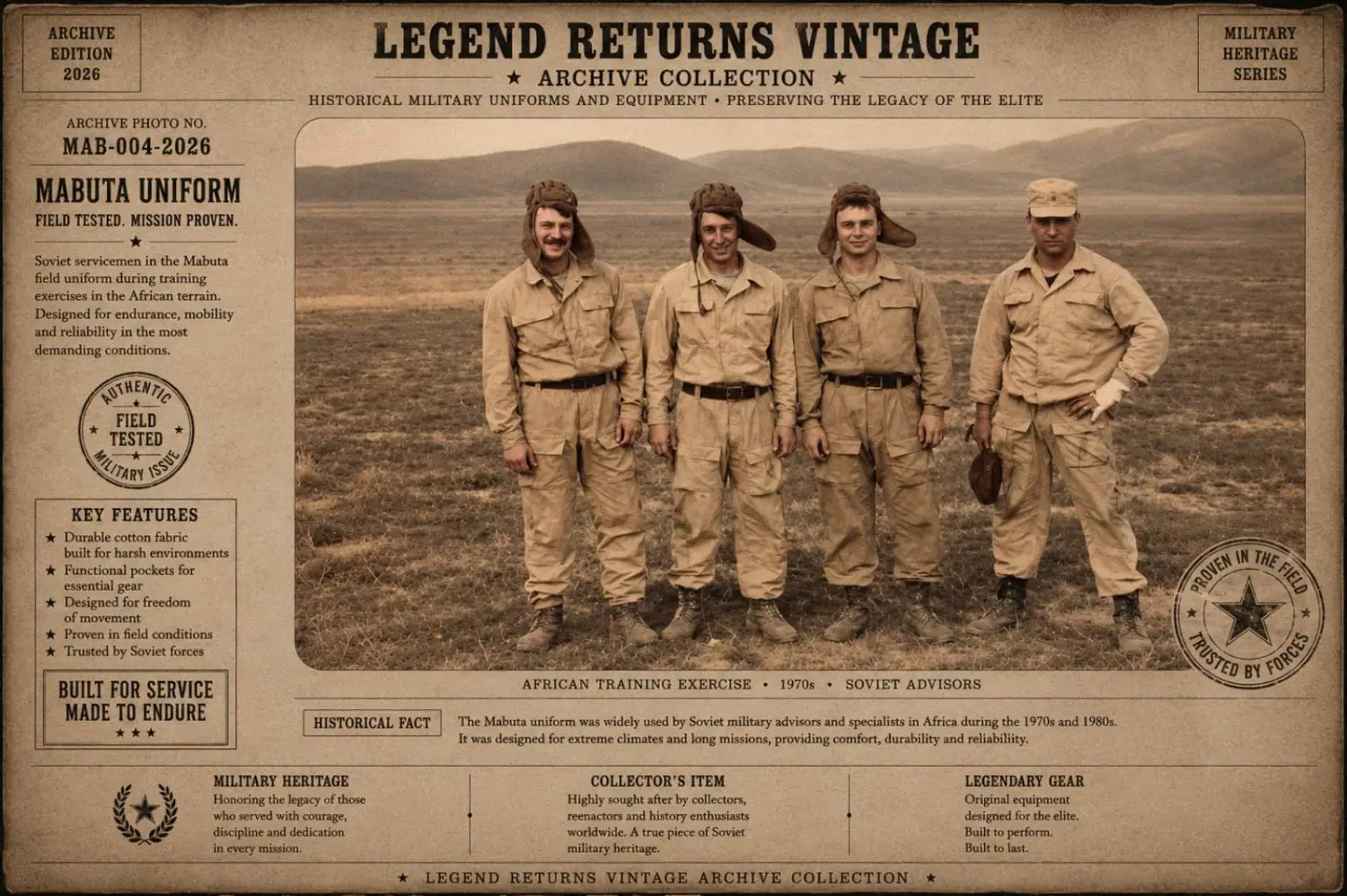
The story of the Mabuta begins during the 1970s, a period when Soviet military planners increasingly recognized the need for specialized field clothing. Standard infantry uniforms were designed primarily for conventional large-scale warfare, but special units often operated under completely different conditions. Reconnaissance teams, airborne troops, and special purpose detachments required clothing that offered greater mobility, comfort, and practicality during long missions.
Unlike traditional field uniforms, the Mabuta was designed with the realities of special operations in mind. It featured a more ergonomic cut, practical pocket placement, improved ventilation, and a fit that allowed greater freedom of movement. The jacket and trousers were intended to function effectively during extended field use while carrying equipment, weapons, and supplies. These improvements made the uniform especially attractive to elite formations operating far from conventional support structures.
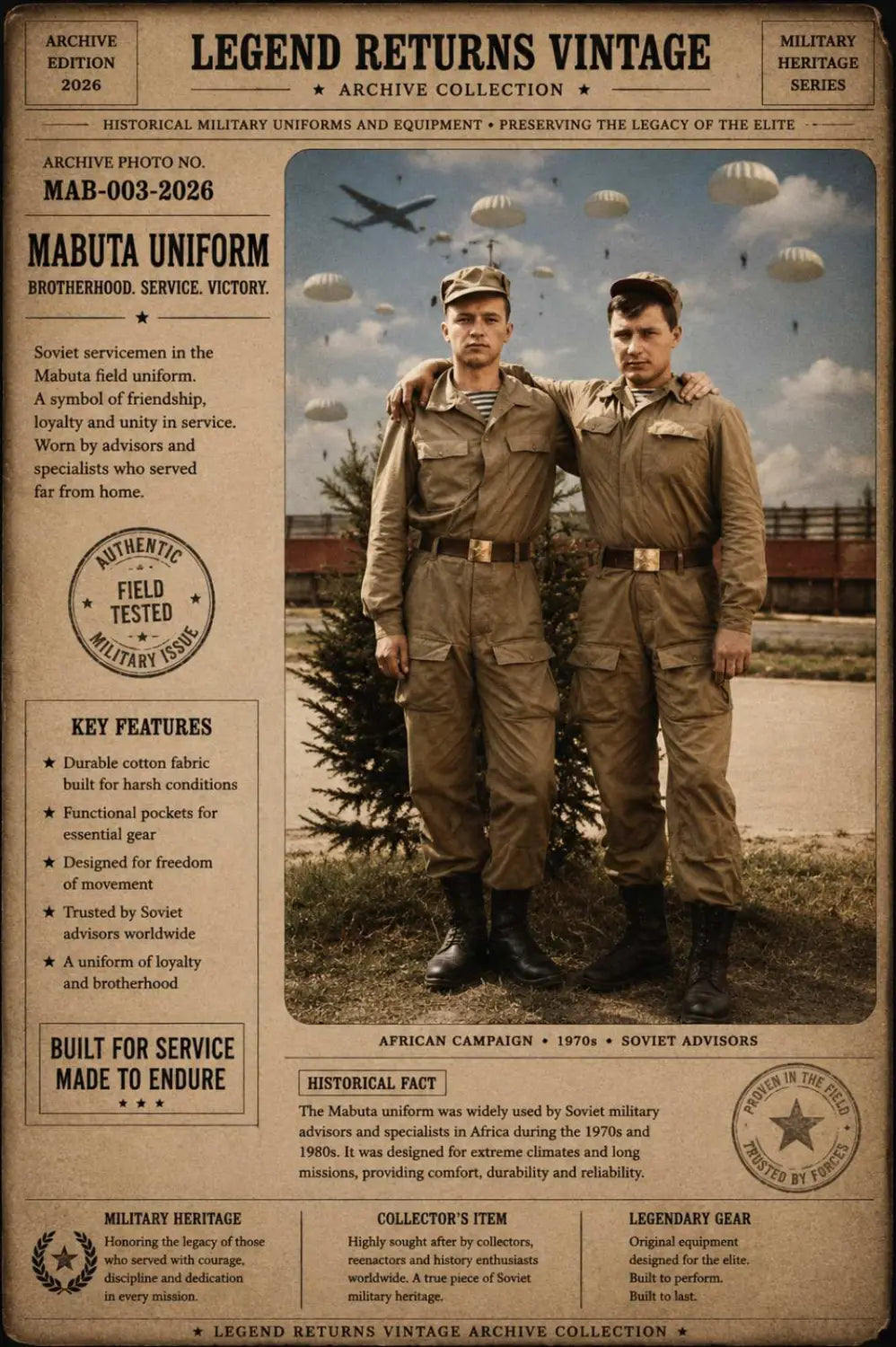
The origin of the nickname "Mabuta" has become part of Soviet military folklore. One widely repeated explanation links the name to Mobutu Sese Seko, the leader of Zaire. According to military tradition, early versions of the suit were associated with Soviet personnel serving in Africa or advising allied nations, leading to the uniform receiving an informal nickname that eventually became more famous than its official designation. While historians continue to debate some details, the name remained attached to the uniform and became known throughout the Soviet military community.
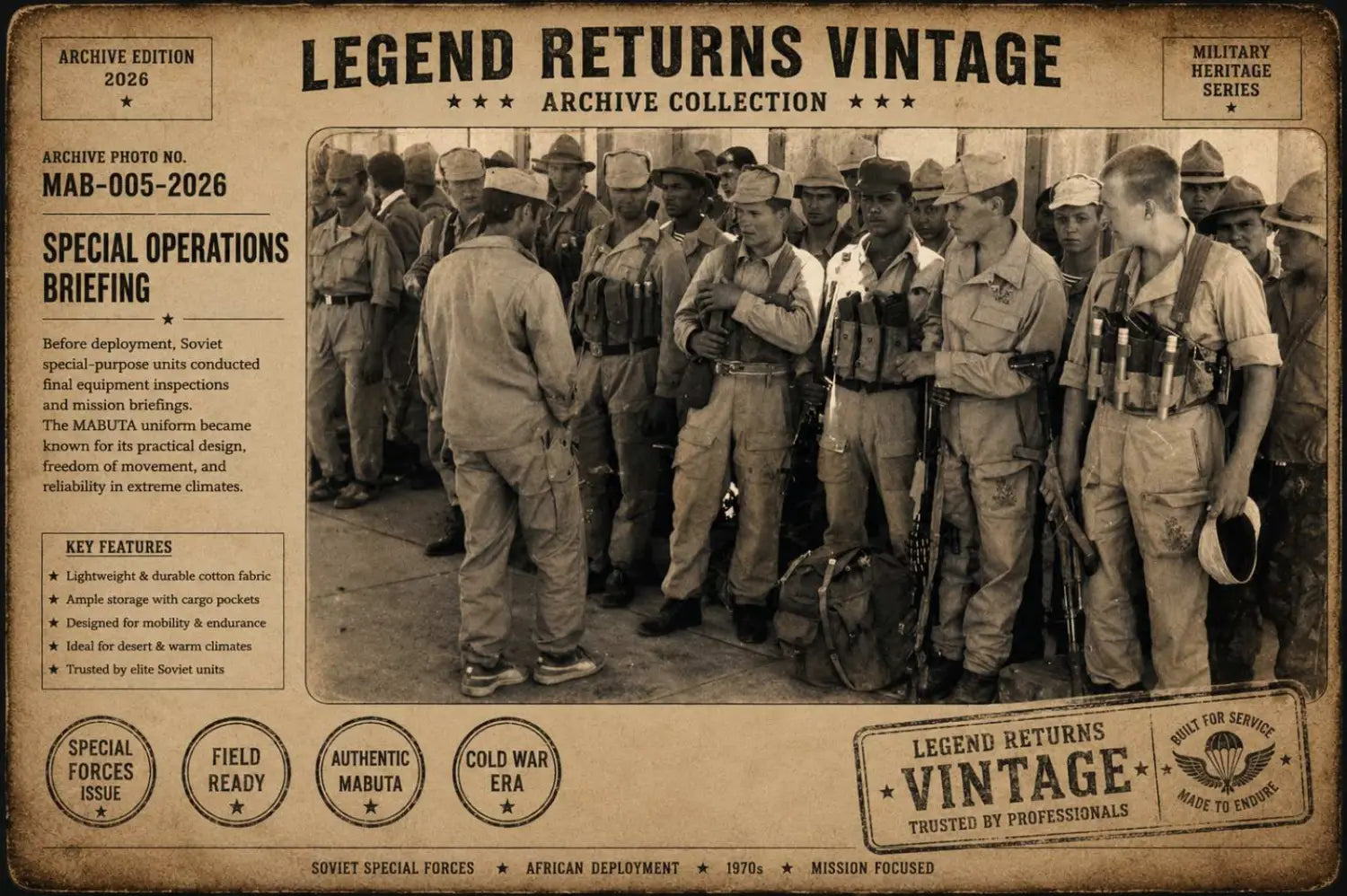
The timing of the Mabuta's appearance was significant. During the Cold War, Soviet special purpose units expanded their operational role. Reconnaissance detachments, airborne formations, and special forces units increasingly required equipment adapted to difficult terrain, harsh climates, and unconventional missions. The Mabuta emerged as part of a broader effort to improve the effectiveness of personnel operating under demanding conditions.
One of the most important chapters in the history of the Mabuta was its association with Soviet special forces. Units connected with GRU special purpose formations, airborne troops, and other specialized detachments became closely linked with the uniform. Over time, photographs of Soviet special operators wearing Mabuta suits helped establish its legendary reputation among military enthusiasts.
The Soviet-Afghan War transformed the reputation of the Mabuta even further. When Soviet forces entered Afghanistan in 1979, they encountered conditions dramatically different from those for which much of their equipment had originally been designed. Mountain warfare, extreme temperatures, long patrols, dust, and rugged terrain exposed the limitations of conventional gear. The conflict became a proving ground for uniforms, equipment, and field adaptations throughout the Soviet military.
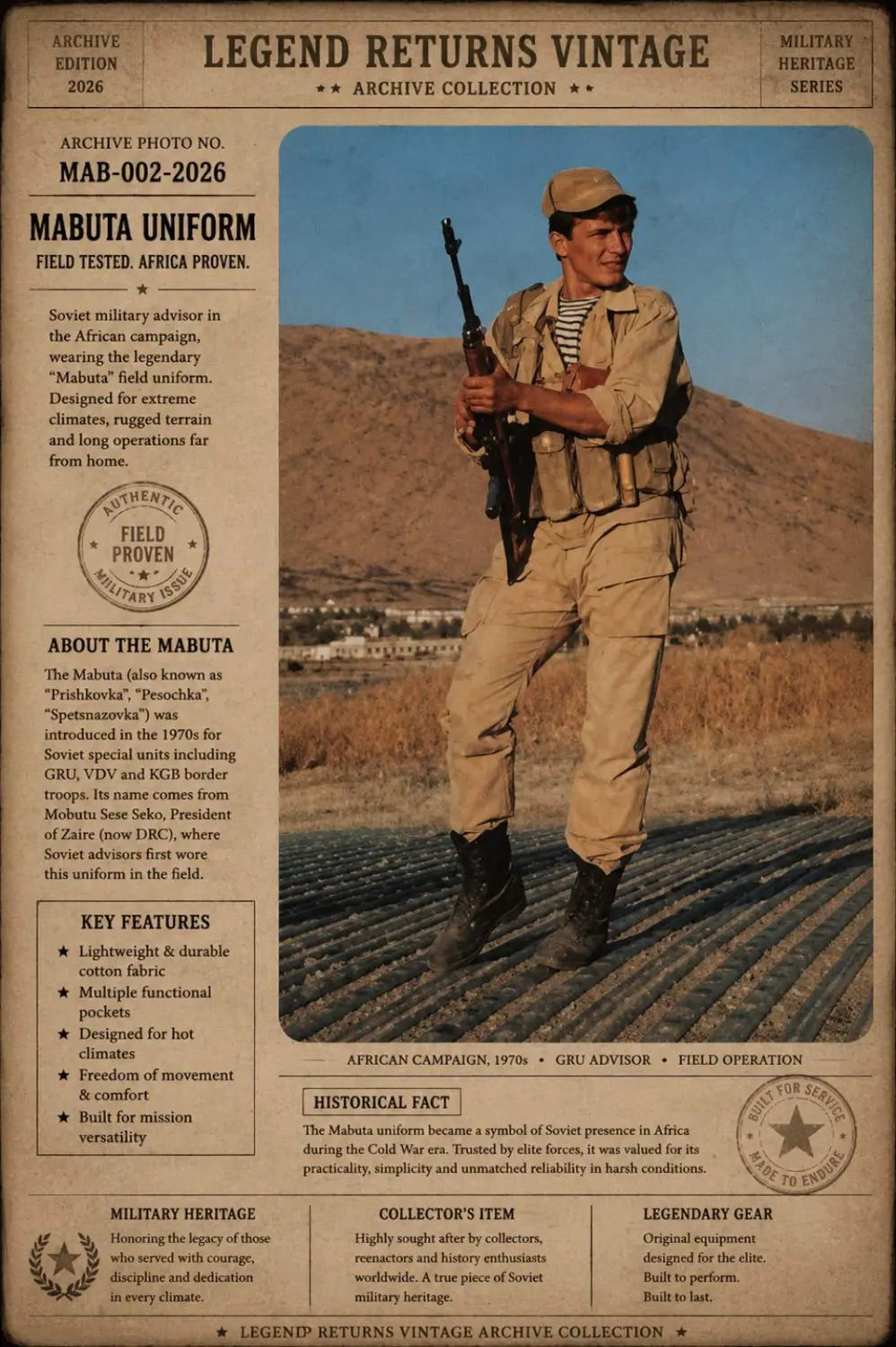
In Afghanistan, mobility often meant survival. Troops frequently operated far from vehicles and had to carry everything required for extended missions. Under these circumstances, practical field clothing became increasingly important. The Mabuta's design proved well suited to these realities. Its functional layout, durable construction, and comfortable fit made it popular among personnel who valued equipment that worked under difficult conditions. Many of the images that collectors associate with Soviet special forces in Afghanistan feature personnel wearing variations of the Mabuta uniform.
The Mabuta was never merely a uniform. It represented a different approach to military clothing. Instead of focusing solely on parade appearance or standardized issue requirements, the design reflected the needs of soldiers operating in the field. Large pockets allowed essential items to remain accessible. The overall cut provided greater comfort during movement. Ventilation features helped improve wearability in warmer climates. These practical details contributed significantly to the suit's popularity.
Over time, different versions of the Mabuta appeared. Collectors often distinguish between early and later patterns, with the Mabuta-2 becoming particularly well known. The second-generation version appeared frequently during the later stages of the Soviet-Afghan War and is often regarded as one of the most recognizable Soviet special forces uniforms of the 1980s.
As the Cold War entered its final decade, the Mabuta had already achieved near-mythical status among many servicemen. While countless Soviet soldiers wore standard issue uniforms, the Mabuta became associated with units that carried out difficult and often demanding assignments. This connection helped elevate the uniform beyond its practical purpose and transformed it into a symbol of elite service.
Following the dissolution of the Soviet Union in 1991, many items of Cold War military equipment gradually disappeared from active use. Some uniforms were worn out through years of service, while others were lost, discarded, or stored away. Original Mabuta suits became increasingly scarce. As a result, collectors began actively searching for surviving examples that retained authentic Soviet construction and historical provenance.
Today, original Soviet Mabuta uniforms are among the most desirable pieces of Soviet militaria. Historians value them as artifacts connected to the evolution of Soviet special operations forces. Reenactors seek them for historical accuracy. Museums preserve them as examples of Cold War military development. Vintage military clothing enthusiasts appreciate their practicality and distinctive appearance.
An authentic example of the legendary Mabuta-2 summer suit can be viewed here:
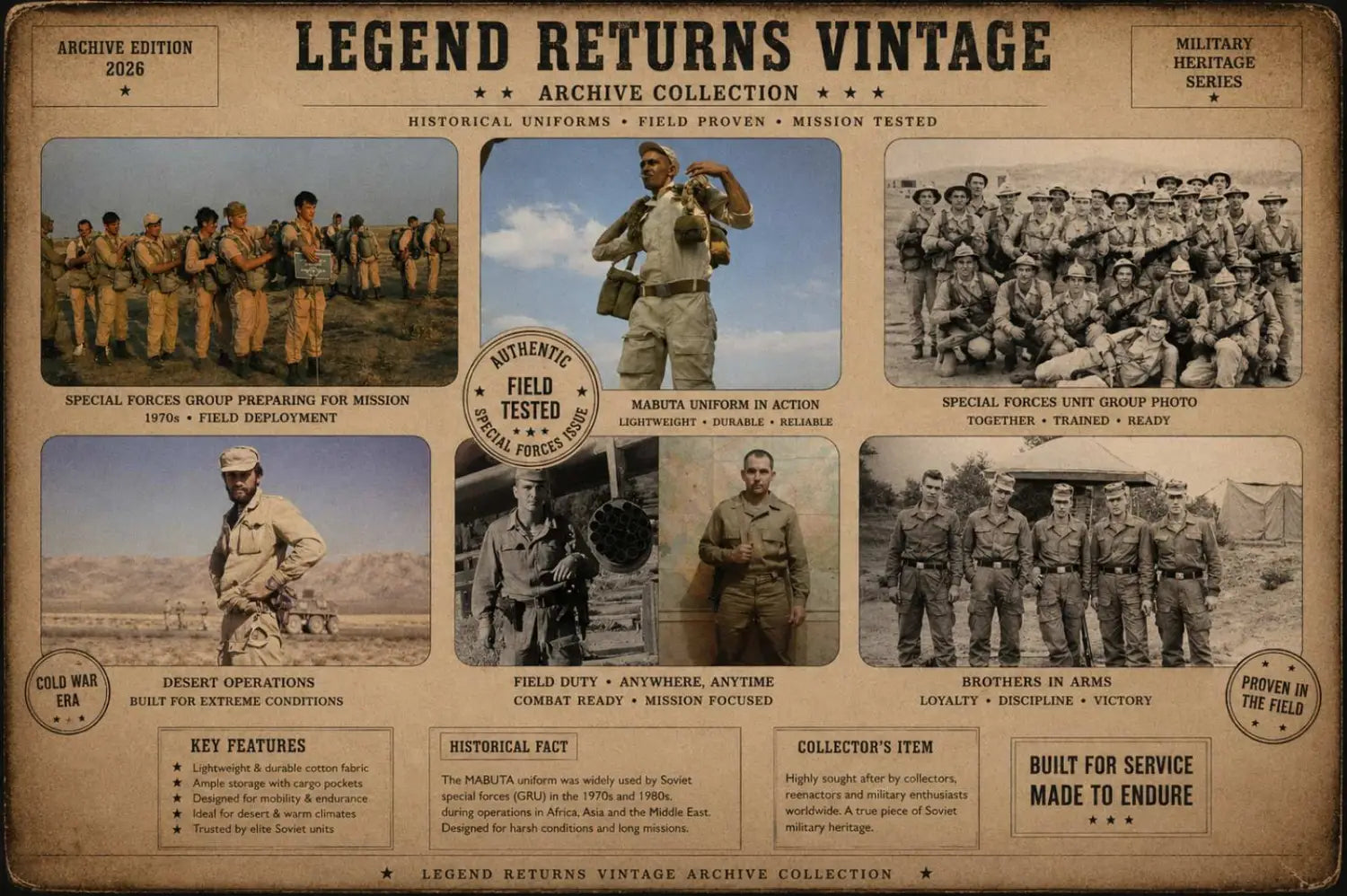
Collectors searching for genuine Soviet special forces equipment often discover remarkable preserved examples through Legend Returns Vintage, where original artifacts connected to the history of the USSR continue to be preserved for future generations.
The enduring appeal of the Mabuta lies not only in its rarity but also in what it represents. It reflects a period when military equipment evolved through real-world experience, adaptation, and practical necessity. Every surviving suit tells a story about the people who wore it, the environments in which it was used, and the era that produced it.
More than forty years after its introduction, the Mabuta remains one of the most iconic uniforms associated with Soviet special operations history. Its image continues to appear in photographs, collections, museums, and historical research dedicated to the final decades of the Cold War.
For collectors and historians alike, preserving an original Mabuta means preserving a tangible connection to one of the most fascinating chapters of Soviet military history. Long after the missions, deployments, and conflicts of that era have passed into history, the Mabuta continues to tell the story of the men who wore it and the world in which it served.
✦ Preserve History. Own a Piece of the Past. ✦
Discover authentic Soviet militaria at Legend Returns Vintage.
Carefully selected historical items for collectors, reenactors, museums, film productions, and vintage enthusiasts worldwide.